
Deprecated: Function WP_Dependencies->add_data() was called with an argument that is deprecated since version 6.9.0! IE conditional comments are ignored by all supported browsers. in /home3/theliftc/domains/theliftc.com/public_html/wp-includes/functions.php on line 6131

TLC Insights

15th June 2023

⚠IMPORTANT INFO!⚠

When individuals find themselves trapped in a lift, panic is a common response that can escalate the situation and lead to potential risks. Panic may arise from the confined space, the lack of control, or fear of being trapped for an extended period. In this state of distress, people may attempt to force the doors open, unaware that modern lifts are equipped with safety mechanisms designed to prevent such actions. Tampering with the doors or forcing them open can cause severe injuries or even result in fatalities if the lift suddenly starts moving.

While mechanical failures or malfunctions can contribute to incidents in lifts, they are relatively rare occurrences due to stringent safety regulations and regular maintenance checks. Modern lifts should undergo rigorous inspections to ensure their proper functioning and mitigate the risk of accidents. However, in rare cases, technical glitches or unforeseen malfunctions can cause a lift to stop or behave unexpectedly due to a myriad of reasons.

To enhance safety and minimise risks in such situations, it is crucial for individuals to follow proper guidelines and stay aware of their surroundings. Staying calm is of utmost importance, as panic can impair judgment and lead to hasty decisions.

What to do if you are stuck in a lift;

1.  Stay calm: It’s natural to feel anxious or panicked in such situations but try to stay calm. Remember that help is on the way once the maintenance provider has been notified.
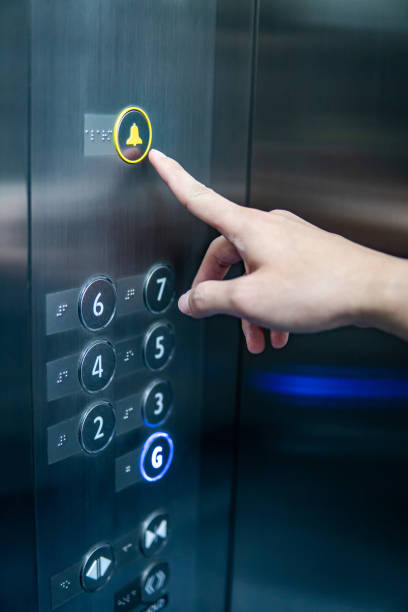
2. Check for communication: Look for an emergency intercom or alarm button inside the lift. These are typically located near the control panel or on the side walls. Use it to alert the either the maintenance provider’s call centre or building personnel about the situation.
3. Call for help: If there’s no emergency intercom or it’s not working, use your mobile phone to call for help. Provide them with the details of your location and the fact that you’re stuck in the lift.
4. Do not attempt to force the doors open: It’s important to refrain from trying to pry the doors open yourself. Modern lifts are equipped with safety mechanisms that prevent the doors from opening in between floors, and tampering with them could be dangerous.
5. Await assistance: Once you’ve alerted the appropriate authorities, be patient and wait for help to arrive. Building management or an elevator technician will respond promptly to coordinate rescue efforts and resolve the issue.
6. Stay near the floor: If you feel more comfortable sitting or leaning against something, choose the floor of the lift closest to the ground. This can help reduce any potential injuries in case of a sudden jolt when the lift starts moving again.

Remember, these steps are general guidelines, and you should follow any specific instructions provided by the lift’s emergency system or the professionals you contact for assistance.

⚠ Stay Safe, Stay Alert!⚠
24th May 2023

Inferior Product ❌ or Fit for Purpose? ✅

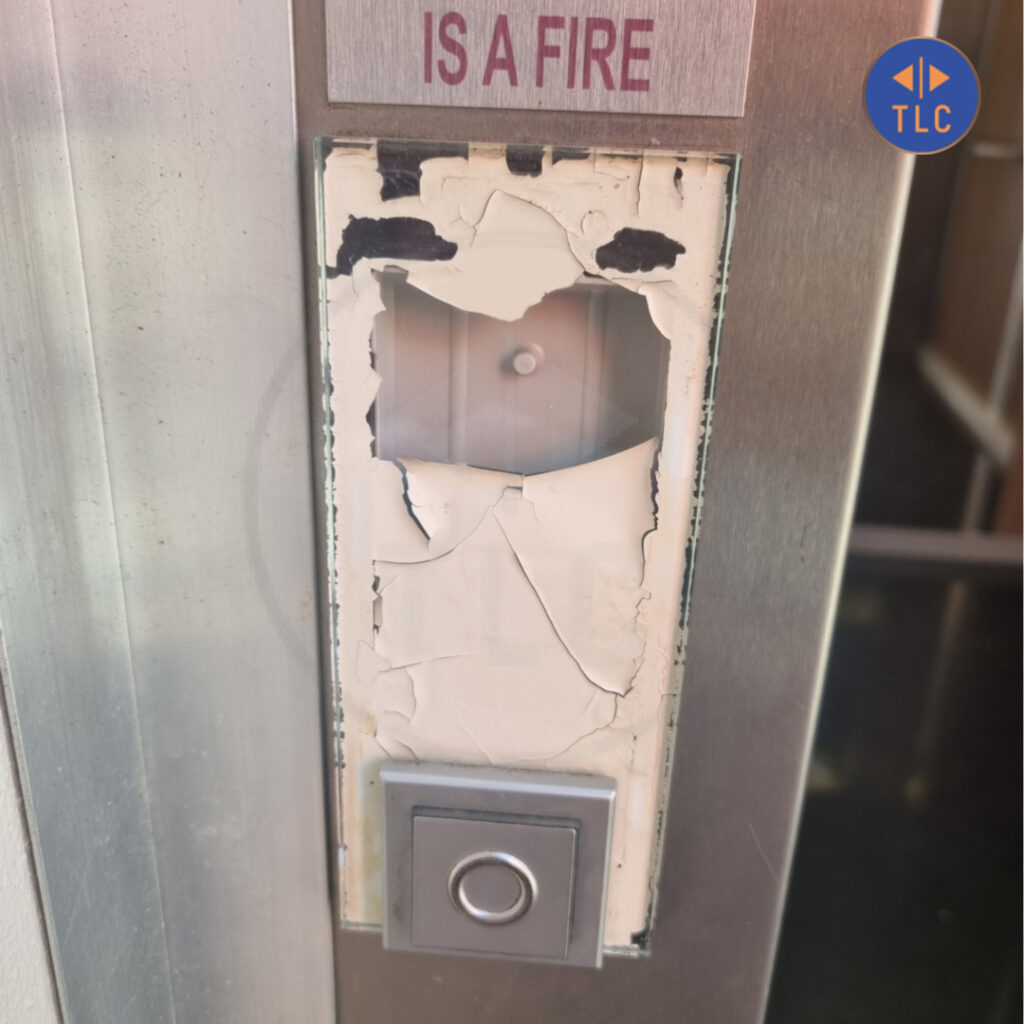
We would like to gather your opinion on an issue we have encountered with a lift that has been installed outdoors for 7 years. The lift buttons and screens have significantly deteriorated, presumably due to sun exposure. Please refer to the attached photos showing the current condition of the screens and buttons (the front glass is not cracked).

The Original Equipment Manufacturer (OEM), who is also responsible for on-site servicing, has acknowledged the need for replacement. However, they have stated that the building owners would be responsible for covering the costs. According to the OEM, the deterioration is considered an “external influence” and falls outside the scope of their direct maintenance agreement.

The building manager has informed us that the deterioration began approximately 3 years ago, when the lift was around 4 years old, and has progressively worsened since then.

We believe there is a valid argument to be made that the buttons and screens may be an inferior product if they degrade in this manner. We have observed many screens and lift buttons lasting much longer in similar outdoor environments. The Lift Consultancy shares our concerns and believes this raises questions about the suitability of these components for outdoor installations and their overall fitness for purpose.

We value your thoughts on this matter. Do you believe the deterioration of the lift buttons and screens in this time period is acceptable? Or, do you believe the buttons and screens may be an inferior product, not serving the purpose to which they were designed for?

Inferior Product ❌ or Fit for Purpose? ✅

10th May 2023

Good Morning Everyone!

⚠ Please read below ⚠
(WARNING: Photos may be Graphic for some readers)

Last week, a harrowing incident occurred at Sydney Domestic Airport when a four-year-old girl’s shoe (a popular clog type) got caught in an escalator. The girl had been traveling down the escalator when she began to shout for her mother, indicating her shoe was stuck. Her mother tried to free her shoe from the running unit, but unfortunately, it wouldn’t budge. Thankfully, a gentleman who had been traveling down the escalator behind them realised what was happening and quickly ran past them to activate the emergency stop switch. Once they got the girl’s foot out of the escalator, it was apparent that she had sustained serious injuries. Her foot was heavily bruised, the skin was extensively damaged, and her middle toe was broken. If the stop button hadn’t been activated before the girl reached the bottom of the unit, she may have lost her foot. While the reason for the incident remains unclear, some reports suggest that the footwear may have melted due to friction caused by the little girl’s foot rubbing against the escalator’s metal.
 
We are relieved to report that the girl is recovering at home with her mother and should make a full physical recovery. However, she is now mentally scared and terrified of escalators. This incident serves as a reminder to everyone who travels on escalators and moving walkways of the potential dangers that exist when travelling on moving plant.
 
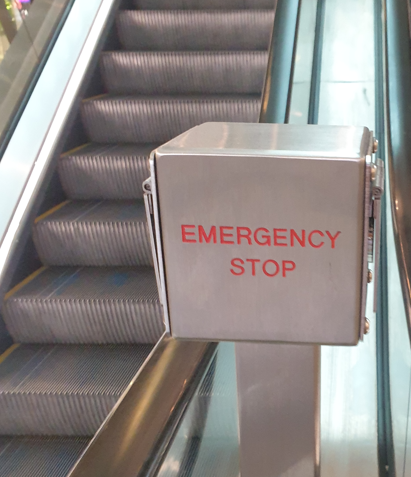
It also made us think about how many people are aware of where the stop button on an escalator or moving walkway is located. Typically, most escalators and moving walkways have a stop button located at the very top and bottom of the unit, at foot level. However, longer, and newer units will have stop buttons located in the middle of unit as well, sometimes on pedestals or within the glass balustrade. The next time you travel on an escalator or moving walkway, take a moment to locate the stop switches, as you may need to activate them to prevent someone from being seriously injured or even killed.

Stay safe out there and be mindful of where stop switches are located – they could be the difference between a broken toe and a lost foot.

(Also can you spot the stop switch in the last photo? Answers on a postcard). 🛑

23rd March 2023

“On This Day in VT History!” #1 – 23rd March 🎉

The Lift Consultancy are pleased to bring you our ‘On This Day in VT History’ series where we provide interesting facts and key dates associated with anything related to the world of Vertical Transportation. To Kick off the series we have a very important key date that revolutionised the Vertical Transportation Industry across the globe. So, without further ado, let’s have a look at what happened on this very day in VT history!!!!

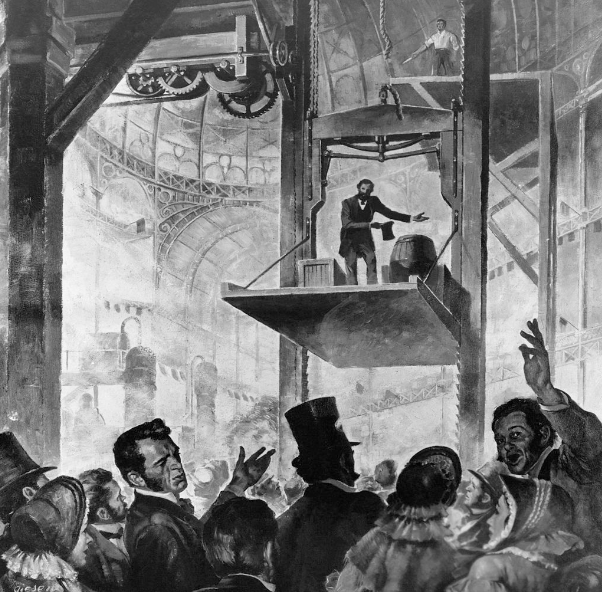
On March 23, 1857, the Otis Elevator Company introduced a game-changing innovation for elevators: the “safety brake” or “safety hoist”, which made elevators much safer and revolutionised the Vertical Transportation industry. This device was patented by Elisha Otis in 1861, but in its first year, the company only sold three elevators.

Before this invention, elevators were considered risky due to the possibility of hoisting ropes breaking or slipping and causing accidents. The safety brake addressed this issue by automatically engaging and stopping the elevator’s movement in the event of a rope failure. This innovation made elevators much safer for passengers, allowing for the construction of taller buildings and transforming the urban landscape.

In 1854, at the New York Crystal Palace, Otis demonstrated the safety brake by standing on a raised hoisting platform above a crowd and cutting the rope suspending the platform. The brake stopped the platform after it dropped only a few inches, proving the safety of Otis elevators, which greatly increased sales.

On this day (March 23) in 1857, Otis installed the first commercial elevator in the E.V. Haughwout & Company department store in New York City, located at the corner of Broadway and Broome Street. This installation was a significant milestone, as the success of the commercial elevator would revolutionise architecture by making skyscrapers possible. The Otis elevator design used a governor device that would engage knurled rollers, locking the elevator to its guides should the car start to fall. The Haughwout Building elevator moved at a speed of 0.67 feet per second and was powered by a steam engine in the basement.

In addition to providing convenience, the adoption of passenger elevators created jobs for operators who used a lever to raise, lower, and stop the car. It wasn’t long before elevators became fully automated with buttons and electronics, but they remain a very safe way to travel to great heights, and the Otis Elevator Company remains a leader in the people-moving industry, with elevators, escalators, and moving walkways installed around the world.

14th March 2023

Is a lift pit, shaft, machine room a confined space? ☢

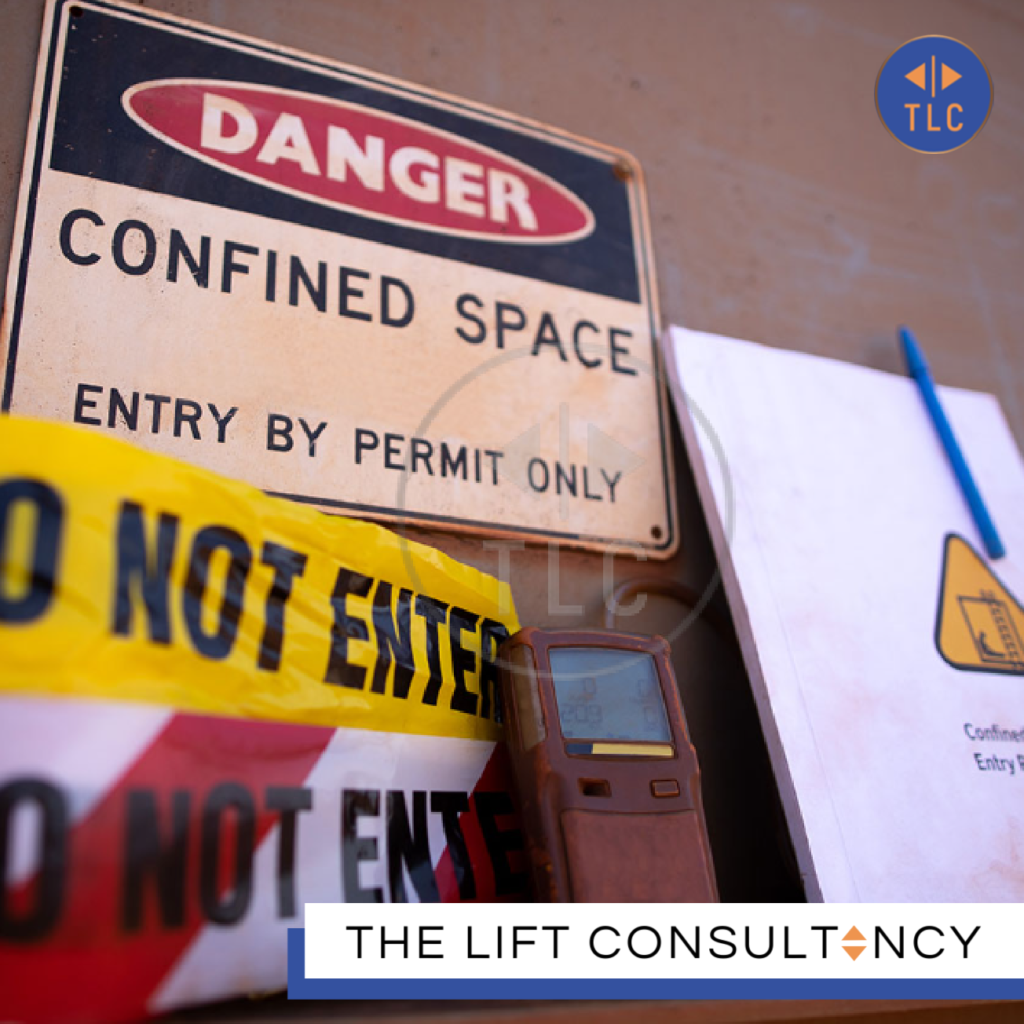
In Australia, a confined space is defined as an enclosed or partially enclosed space that is not designed or intended for human occupancy, except for the purpose of performing work, and has restricted means of access and egress. It may become hazardous to personnel entering it due to its design, construction, location, atmosphere, materials or substances in it, or any other conditions relating to it.

A ‘confined space’ means an enclosed or partially enclosed space that:
• is not designed or intended primarily to be occupied by a person; and
• is, or is designed or intended to be, at normal atmospheric pressure while any person is in the space; and
• is, or is likely to be, a risk to health and safety from:
• an atmosphere that does not have a safe oxygen level
• contaminants, including airborne gases, vapours and dusts, that may cause injury from fire or explosion
• harmful concentrations of any airborne contaminants engulfment

but does not include a mine shaft or the workings of a mine.

Classifying lift pits, machine rooms, and shafts, as a confined space or not is a contentious issue. Factors such as the means of entry and exit, the atmosphere within the space, and the potential for hazardous materials or substances to be present should all be considered.

Labelling a lift well and lift pit a confined space is a highly contentious issue inside and outside of the Vertical Transportation Industry.

Let’s have a look at some facts! 

• A lift pit typically requires a ladder for access with the exception of pit doors, meaning there is a restricted means of entry and exit. 
 • Lift Pits are not designed for continuous human occupancy since they generally cannot be occupied during normal lift operation.
 • In most cases the atmosphere breathed by the lift technician will be the same that is breathed by passengers within the lift cabin. However, there are exceptions where this is not always the case like lift pits installed in car parks, treatment plant and power stations where harmful gasses can potentially settle.

The decision on whether a lift pit, machine room, or shaft should be classified as a confined space ultimately depends on the specific circumstances of the installation and the results of a risk assessment. The flow chart provided by Safe Work Australia can be a useful tool in identifying confined spaces, but it should be used in conjunction with a thorough risk assessment to ensure that all hazards are properly identified and controlled.

So, I ask you, is a lift pit, shaft, machine room a confined space?

3rd March 2023

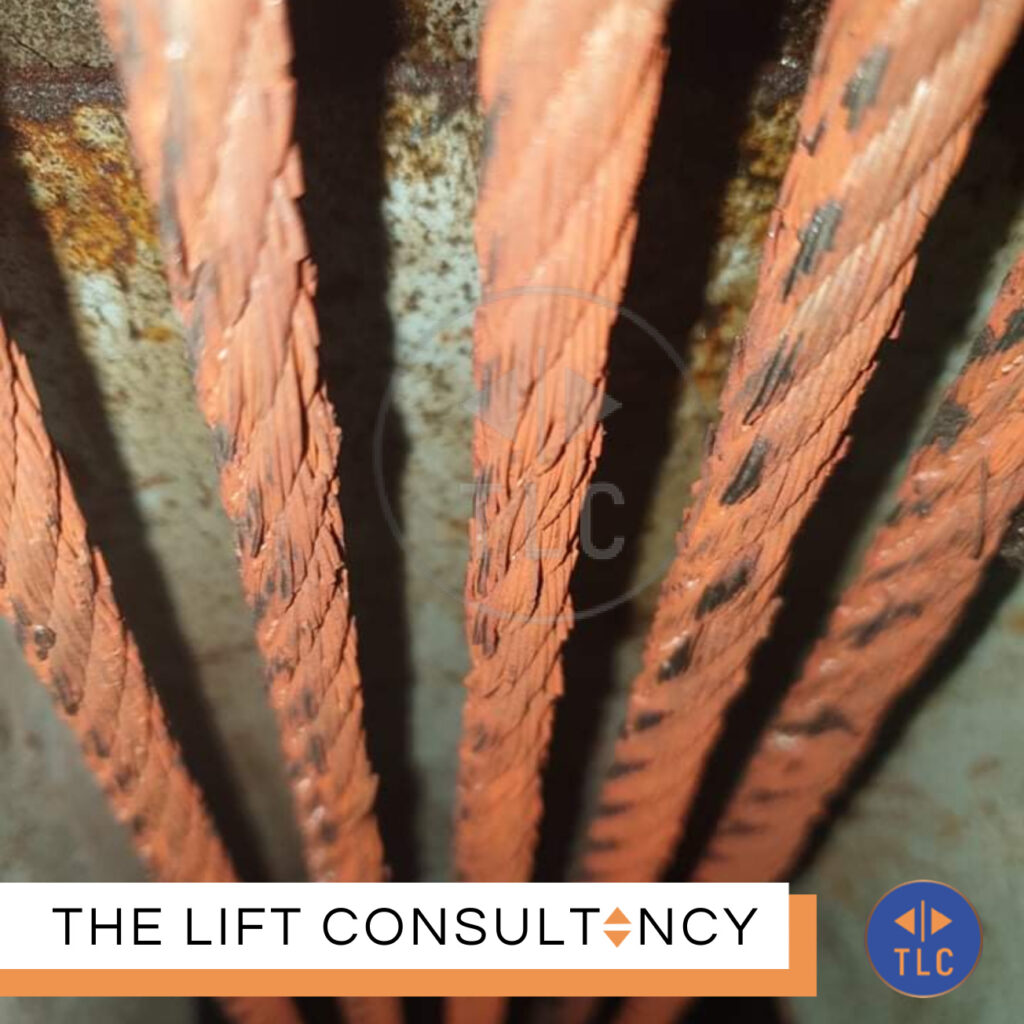
Rope Rouge is a reddish-brown discoloration that can form on lift hoist ropes. This discoloration is a sign that the steel weakened, reducing its strength, and increasing the risk of rope failure, which can lead to equipment damage and in some instances injuries.

The formation of Rope Rouge is caused by a combination of factors, including oxidation, lack of lubrication, and environmental conditions. Environmental conditions, such as high temperatures and humidity levels, can create an ideal environment for rust to form. This is more prevalent in seaside tropical environments. Lubrication is used to reduce friction and wear on the rope, but it can also trap moisture and contaminants against the surface of the rope, accelerating the rusting process.

Rope Rouge can accumulate and get into the mechanical and electrical components of a lift, including the PCB boards and lift motors or other sensitive electrical components causing electrical shorting issues. This could stop a lift during travel at full speed exposing passengers to potential injury. Additionally, the presence of Rope Rouge on lift ropes is a concern because it can indicate a loss of structural integrity. The rust can weaken the steel reducing its strength and increasing the risk of rope failure. This can increase the risk of rope failure which can lead to lift downtime, and sometimes injury.

This consumable component is one of the most expensive to replace in materials and labour on a lift installation and is not covered in most lift company maintenance agreements.

Visual inspections and rope gauge deterioration tracking of the lift ropes can help identify when a rope needs replacement. However, In the absence of invasive inspections to gauge the effects of internal corrosion, it may be difficult to determine the full extent of the corrosion and its impact on the ropes’ strength, and a full rope replacement is typically recommended by rope manufacturers.

In general, lift ropes should be replaced periodically based on their age, usage, deterioration, and other factors such as the condition of the sheaves. Lift ropes that show signs of corrosion, wear, or other damage should be replaced as soon as possible to ensure the safe and reliable operation of the lift. Regular third-party inspections can help identify potential problems like rope rouging before they become serious, ensuring the safety of the lift and its passengers.

If you suspect that your lift is receiving substandard maintenance, don’t hesitate to call the team at TLC!
Let’s try and stay on planet earth a while longer.

17th February 2023

Poor Maintenance can lead to important safety features on escalators and moving walkways not operating. This can have devastating consequences. In this instance only a shoe was lost thankfully.

Fun Fact: Did you know the world’s first escalator was actually called the “inclined elevator” and was invented in the late 19th century by Mr Jesse W. Reno. The “inclined elevator” was installed at Coney Island amusement park in New York in 1896 and was used to transport visitors between different levels of the park. Interestingly, it was not initially successful because people were afraid to step onto a moving staircase, and it wasn’t until the early 20th century that the idea of an escalator caught on and became widely used in public spaces such as department stores and train stations.