

Looking down a lift shaft with guide rails and landing doors

test for safety, ensure success

No shortcut is worth a shortcut to safety,

Lift Witness Testing

Witness testing is the independent check that a lift’s safety tests were actually done, done properly, and passed. When a contractor commissions a new or modernised lift, or carries out the periodic tests a maintenance agreement or a regulator requires, we stand in the machine room and on the car top while the tests are run — safety gear, overspeed governor, buffers, brakes, unintended-movement protection, emergency communication and fire service — and we sign off only what we saw. Owners, builders, superintendents and certifiers engage us across Australia and New Zealand.

Recent witness testing includes commissioning of modernised lifts at Rivage Royale on the Gold Coast and periodic tests witnessed for hotel and strata clients in Brisbane and Sydney.

When a lift company installs or maintains a vertical transportation system, they are required to perform safety tests by law. Safety tests are required as part of the process of commissioning a new system, or as part of a periodic maintenance and inspection routine for existing systems.

Vertical transportation systems are complex mechanical systems that involve several moving parts and potentially hazardous elements, such as high-voltage electrical components and heavy weights. As such, it is crucial to ensure that the equipment is tested properly ensuring the safety of anybody using the equipment and protecting the interests of the building owner.

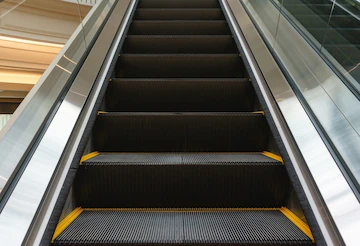
Escalator in a shopping centre viewed from the base

Our team of industry-trained professionals will witness tests with lift contractors to ensure that the system is safe, complies with the relevant states’ statutory legislation and regulations, operates at optimal levels, and meets the performance requirements outlined in the design specifications.

During a witness test, TLC observes the contractor performing various tests on the vertical transportation system including load testing, safety gear testing, door safety testing, functionality testing, and emergency testing, among others.

Overall, the purpose of a witness test is to provide an independent assessment of the vertical transportation system, ensuring the equipment meets all necessary safety and performance requirements, performs to its optimum levels, and satisfies all of the criteria specified within the design scope.

Upon completion of our witness test, TLC will provide a report detailing the specific tests performed, the results of the tests, and any recommendations or observations made. Any issues observed during the test will be documented and recommendations provided. From time-to-time vertical transportation systems fail certain tests for many reasons. If required TLC will recommend that additional testing or maintenance is performed to ensure the continued safe operation of the vertical transportation system.


What witness testing is

Witness testing is attending the tests on a lift or escalator and verifying, on behalf of the owner, that what was specified is what has actually been installed and demonstrated. It is not a repeat of the contractor's own testing. It is an independent record that the tests took place, that they were carried out correctly, and that the equipment performed as it was required to.

The value is in the timing. Handover is the last point at which a shortfall can be corrected as part of the contract rather than argued about afterwards, and it is the point at which the commercial pressure to sign off is highest.

What gets witnessed

What we commonly find

Rarely anything dramatic. What comes up repeatedly is levelling outside tolerance, door timing set for the convenience of commissioning rather than for the building's traffic, emergency communication that has not been connected to a monitored service, ride quality that is acceptable but well short of what was specified, and handover documentation that is incomplete in exactly the areas that matter later - the parameters, the passwords and the diagnostic access.

None of those items would stop a lift working. All of them are much harder to obtain once the contractor has been paid and demobilised.

Why an owner should not witness their own testing

Attending is not the same as verifying. Knowing which tests should be performed for the equipment in question, in what order, under what load, and what an acceptable result looks like, is a technical exercise. An owner's representative present in good faith and told that everything has passed has no independent basis to say otherwise, and their signature is then used as evidence that it did.

What you receive

A written report listing the tests witnessed, the results, anything not demonstrated and why, and a defects list where one is warranted, with each item tied back to the specification or the standard it fails. Where the installation is acceptable we say so plainly. Where it is not, you have a document that can be acted on before final payment.

(07) 5509 0100