


Insurance matters involving lifts turn on technical questions that neither the owner nor the insurer is usually equipped to settle: what actually failed, why it failed, whether the damage claimed is consistent with that cause, what the reasonable scope of reinstatement is, and where betterment begins. Where those questions are contested, or where the sums are large enough that they will be, an independent assessment is what moves the matter forward.
We are engaged by owners, by strata and building managers, by loss adjusters and by legal advisers. What does not change is the work: we look at the equipment and the evidence and report what we find.
In our experience three things hold lift claims up more than anything else. The first is a scope written by the party who will carry out the work, which makes it very difficult for anyone to test. The second is an absence of records - no maintenance history, no commissioning documents, nothing to establish the condition before the event. The third is obsolescence colliding with the claim: the equipment cannot be reinstated as it was because the parts no longer exist, and nobody has decided how that is handled.
All three are addressable, and all three are easier to address early than after positions have hardened.
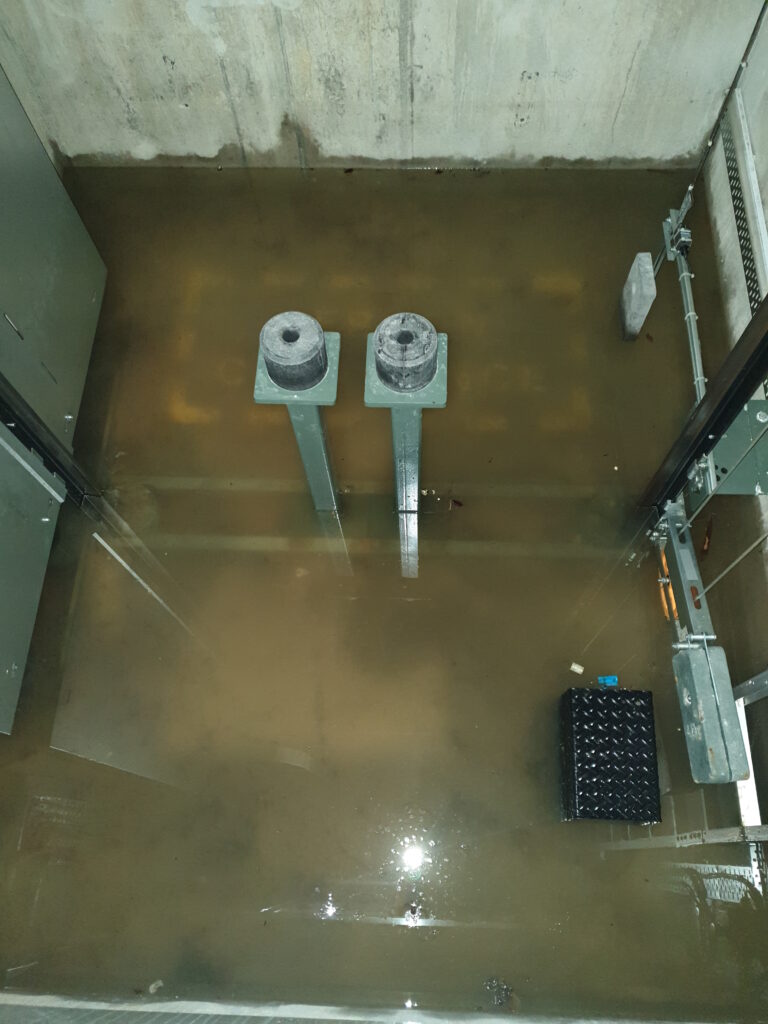
Most lift claims we see fall into a few patterns. Water entering a pit or a shaft, whether from a burst service, a storm or firefighting. Fire and smoke affecting the machine room, the controller or the shaft. Impact damage to doors, entrances and car interiors, often in goods lifts and loading docks. Electrical events affecting the drive and control equipment. Each has its own signature and its own argument about what was already failing before the event.
A written technical report setting out what we inspected, what we found, the conclusions we draw and the basis for them, with the reinstatement scope described so it can be priced independently. Where we cannot reach a conclusion on the evidence available, we say that and say what further evidence would settle it. We do not write to a brief, and we say the same thing whoever engaged us.